

 Women's Bill
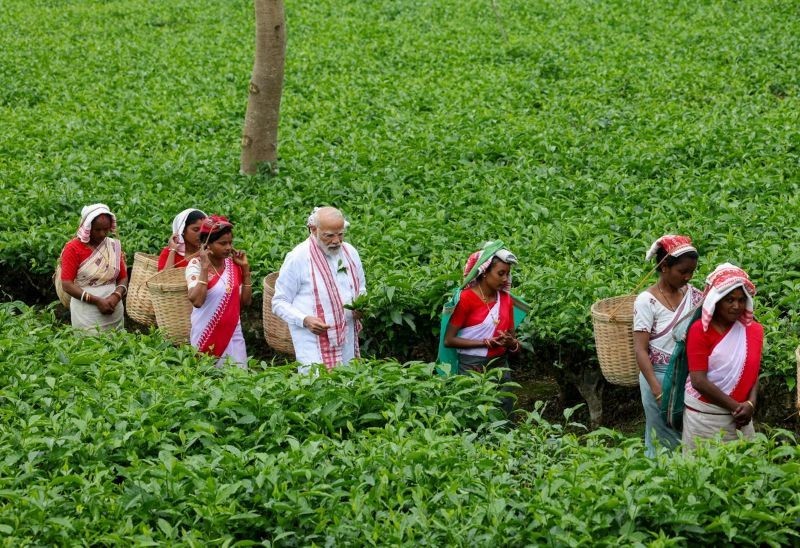
PM Modi's reach out to women at a tea garden in Assam which went to polls on April 9. Photo: Narendra Modi/Facebook
Women's Bill
PM Modi's reach out to women at a tea garden in Assam which went to polls on April 9. Photo: Narendra Modi/Facebook
Modis Womens Bill: Slow burner or strategic blunder?
New Delhi : “Even Chanakya would have been astonished by your political shrewdness,” when Congress MP Priyanka Gandhi Vadra aimed that remark at Union Home Minister Amit Shah in the Lok Sabha, it drew laughter—but also captured the essence of what unfolded: a legislative defeat that may have been politically premeditated.
A Bill That Fell Short
The Women’s Reservation Bill—envisioned to reserve 33% seats for women in the Lok Sabha and state assemblies—was defeated in the Lok Sabha after the Opposition bloc INDIA mustered 230 votes against it.
The ruling NDA, despite backing the bill with 298 MPs, fell well short of the two-thirds majority mark of 360 required for passage.
On paper, it was a straightforward parliamentary loss. Politically, it appears far more layered.
When @priyankagandhi took a jibe at Amit Shah, saying if Chanakya was alive today he could have learnt a thing or two 😂👌🏼 pic.twitter.com/JOMmUu3mmi
— Vijay Thottathil (@vijaythottathil) April 16, 2026
Opposition Claims Moral Victory
The Opposition quickly framed the outcome as a defence of constitutional principles.
Leader of Opposition Rahul Gandhi called it a rejection of an “unconstitutional trick,” arguing the bill’s linkage with delimitation made it suspect.
संशोधन विधेयक गिर गया।
— Rahul Gandhi (@RahulGandhi) April 17, 2026
उन्होंने महिलाओं के नाम पर, संविधान को तोड़ने के लिए, असंवैधानिक तरकीब का इस्तेमाल किया।
भारत ने देख लिया।
INDIA ने रोक दिया।
जय संविधान।
West Bengal Chief Minister Mamata Banerjee went further, projecting the defeat as a symbolic beginning of the BJP’s political decline.
Samajwadi Party chief Akhilesh Yadav dismissed the move as another failed attempt at political manoeuvring.
A Defeat Foreseen?
The more compelling question is not why the bill failed—but why it was introduced at all.
Modi, leading a coalition government dependent on allies like TDP and JD(U), was acutely aware of the arithmetic. The NDA simply did not have the numbers.
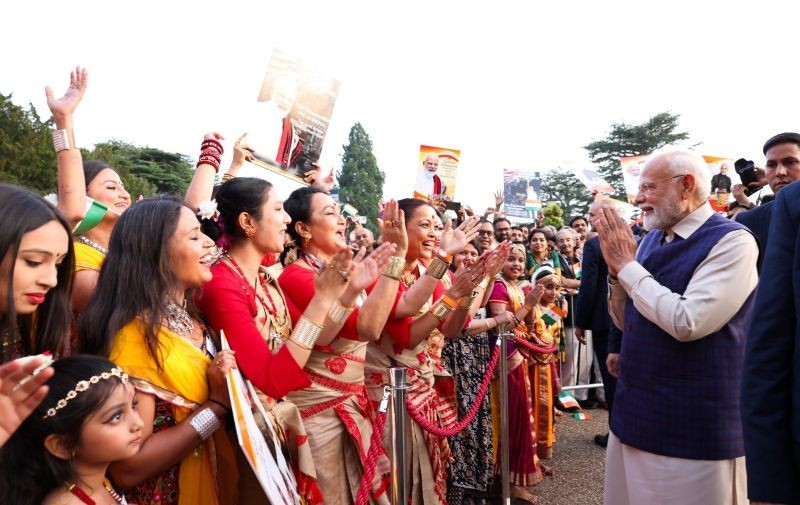 Women voters play a significant role in contemporary Indian elections and the trend is expected to continue in poll-bound West Bengal and Tamil Nadu. Photo: Narendra Modi/Facebook
Yet the bill was tabled in a special session just days before crucial assembly elections.
Modi’s speech during the debate hinted at anticipation rather than uncertainty.
Warning the Opposition about electoral consequences for opposing women’s reservation, he appeared to be setting a narrative in advance.
Rahul Gandhi later echoed this interpretation bluntly: the BJP “knew the bill couldn’t pass,” but introduced it anyway to reshape the political discourse—particularly to reinforce its pro-women positioning.
BJP is not stupid - they knew this bill couldn’t have passed
— Congress (@INCIndia) April 17, 2026
But they still brought it.
This was a panic reaction because the Prime Minister at any cost wanted to send out two messages
1) He wanted to change the electoral map of India
2) He needed to send this message again… pic.twitter.com/dWkgUvTT1Q
The Messaging War
If the legislative battle was lost, the messaging war began immediately.
Shah accused the Opposition of “insulting every woman,” turning the defeat into a moral indictment.
देश की आधी आबादी, 70 करोड़ महिलाओं को धोखा देने और उनका विश्वास खोने के बाद कोई कैसे विजय का जश्न मना सकता है?
— Amit Shah (@AmitShah) April 17, 2026
विपक्ष का यह जश्न हर उस महिला का अपमान है, जो दशकों से अपने अधिकार का इंतजार कर रही है। कांग्रेस और उसके सहयोगी कितनी बार महिलाओं के साथ विश्वासघात करेंगे?
कई बार विजय…
The BJP is now poised to weaponise the outcome—portraying rivals as anti-women ahead of elections, particularly in states like West Bengal and Tamil Nadu.
This places parties like TMC and DMK in a strategic bind.
As pollster Yashwant Deshmukh shared his observation with The Times of India, opposing the bill risks damaging their pro-women credentials, while supporting it could have strengthened the BJP’s narrative.
Electoral Reality Check
However, the bill’s actual electoral impact remains uncertain.
Recent elections—from Madhya Pradesh to Bihar and West Bengal—suggest that women voters have responded more to direct welfare schemes than structural reforms.
Cash-transfer programmes and targeted benefits have proven far more decisive than legislative promises.
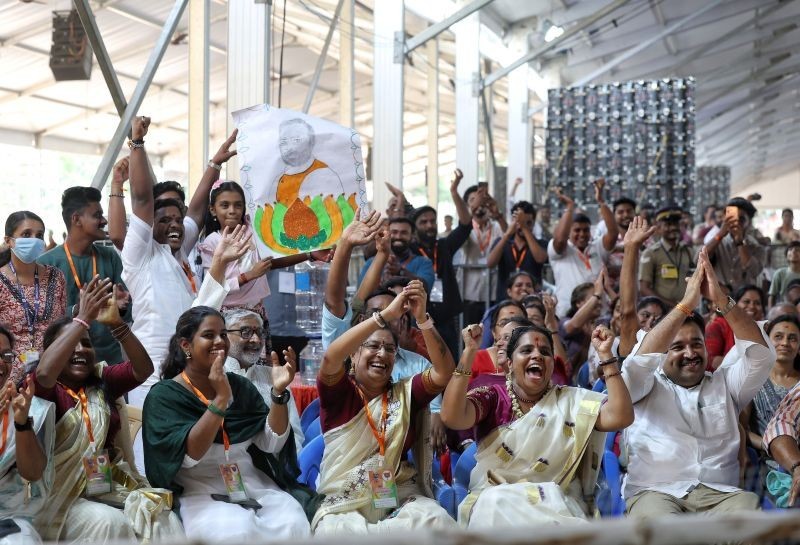 Women voters have played a significant role in contemporary Indian elections and the trend is expected to continue in poll-bound West Bengal and Tamil Nadu. Photo: Narendra Modi/Facebook
Senior journalist Tavleen Singh questioned the government’s intent, calling the move puzzling and potentially its “first big mistake” since demonetisation.
Observing no political impact on women on ground, Singh told Mojo, "I don't think women are upset or angry because they presently vote if they are paid (through welfare schemes) like what happened in Maharashtra and other states."
(Photos: Narendra Modi/Facebook)
Top Headlines
-
News
VeeCycle Works Signs MoU with AP Govt for Rs 150 Cr Recycling Project in Visakhapatnam
October 12, 2026
-
News
Smit Machchhar: Bleeding on the Cockpit Floor, the Indian Captain Opened the Door That Saved 174 Lives
October 01, 2026
-
News
Sona College of Tech, Salem team wins Mitsubishi contest for factory automation; beats 6 national winners across Asia
September 20, 2026
-
News
After days of silence, China confirms Xi Jinpings India visit for BRICS Summit
September 10, 2026
-
News
ISKCON Juhu in trouble: FDA suspends licences of 3 restaurants over serious hygiene violations
September 09, 2026
-
News
Sona College of Technology's 25th graduation day: 1,325 students receive BE, BTech, ME, MCA, MBA and PhD degrees
September 09, 2026
-
News
Air India sacks Phuket-Delhi pilot who tested positive for psychoactive substance
September 04, 2026
-
News
Gloria Steinem, who gave second-wave feminism its face and its argument, dies at 92
September 04, 2026
-
News
Rs 20 bribe case ends after 30 years as Supreme Court acquits Gujarat employees
August 19, 2026
-
News
RG Kar rape-murder case takes fresh turn as ex-TMC MLA Nirmal Ghosh arrested over cremation probe
August 13, 2026